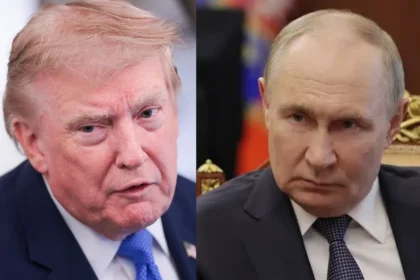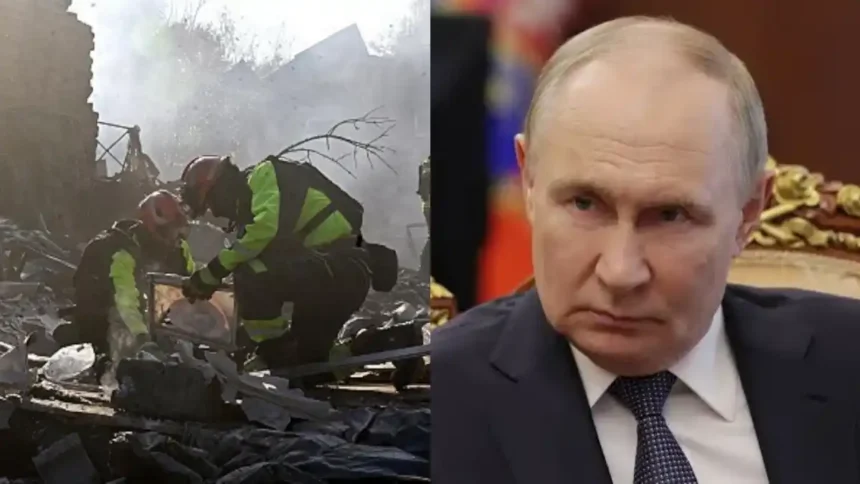
Russia struck a major power plant in the Ukrainian city of Kharkiv on Sunday evening, only hours after President Donald Trump announced that Russia and Ukraine had agreed to an “energy ceasefire,” Ukrainian officials said. Ukraine’s presidential office confirmed that the attack came after Trump’s post. The strike has left the truce in doubt before it had even been explained to either side.
What Trump announced
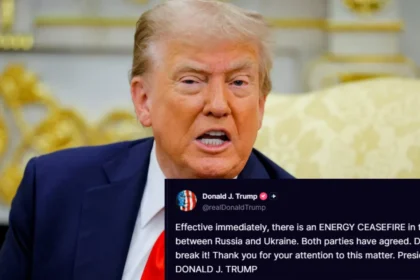
Trump announced the truce on Truth Social on Sunday morning. His post said the ceasefire was effective immediately, that both parties had agreed to it, and warned them not to break it. He gave no details on its terms. The post did not say what counts as energy infrastructure, how long the truce would last, or who would monitor it.
Kyiv caught off guard
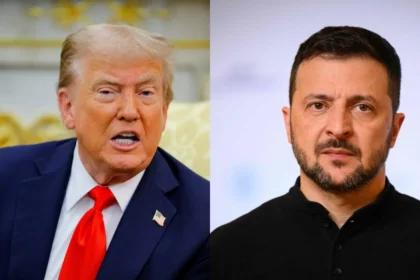
Ukraine had not been consulted. Zelensky told Axios that Trump’s post was the first he had heard of the deal. A senior source in his office told ABC News that he found out from social media. He said Ukraine would accept the ceasefire if Russia did, and asked Washington to tell Kyiv when it was meant to begin. The announcement seemed to catch both Kyiv and Moscow off guard.
Shortly before Trump’s post, Zelensky told ABC’s “This Week” that Ukraine wanted an immediate energy ceasefire. He said Kyiv was ready to stop attacking Russian oil refineries if Moscow halted its attacks on Ukraine’s energy infrastructure.
The strike on Kharkiv
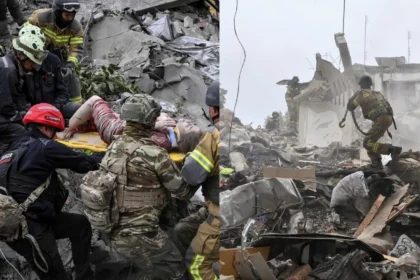
At around 8 p.m., Zelensky said there had been a strike on the CHP-5 plant in Kharkiv. It is the city’s second-largest power plant. A local official told ABC News that the plant was hit at least twice, causing a fire. Zelensky said another power facility, in Kyiv, was also attacked after Trump’s announcement.
In his evening address, Zelensky said Ukrainian skies had been full of Russian Shahed drones all day and that glide bombs had also struck the country. He wrote on social media that all of this happened after the US president’s statement about an energy ceasefire.
Civilian toll
After the power plant was hit, a Russian missile struck a grocery store in the suburbs of Kharkiv. Regional governor Oleh Syniehubov said at least three people were killed and more than 20 injured, including two children. On Monday, Kharkiv’s mayor said further Russian attacks wounded at least 12 people.
The Kharkiv strike was not an isolated event. Zelensky said Russia carried out more than 200 strikes on Ukraine’s power generation and transmission over the past week, plus 17 on gas and oil sites. He said more than 150 people were killed and more than 700 wounded in that period.
“Putin does not read Truth Social”
Zelensky said it had been clear that Putin does not read Truth Social, the platform on which Trump announced the truce. He said Kyiv had not been consulted and learned of the deal through the media. He said that immediately after Trump’s post, Russia launched what he called a targeted strike on a power plant in Kharkiv.
Zelensky said Ukraine “immediately supported” the ceasefire idea, and that Ukrainian forces refrained from striking Russian refineries overnight. He warned that if Russia does not agree to an energy ceasefire this winter, Ukraine will respond. Large parts of Kyiv were without electricity and water when Trump made his announcement. He urged European leaders to make sure Washington understood that an energy ceasefire and credible security guarantees had to exist “in reality, not just on Truth Social.”
Zelensky’s position
Zelensky said Ukraine was ready to refrain from striking Russian energy sites and counted on Russia to do the same. “Ukraine wants peace,” he said. “The question is whether Russia wants it.” He also told ABC News that he would hold elections if Russia agreed to a 60-day ceasefire.
Russia has not commented on Trump’s claim. Reports on Sunday night also said Trump had threatened to stop weapons supplies and withhold intelligence if Ukraine did not agree to the truce. That claim has not been officially confirmed.
Reaction from Europe and allies
On Monday, EU foreign policy chief Kaja Kallas told a meeting of EU foreign ministers that the bloc would welcome an energy truce “when it holds.” She welcomed Trump’s announcement but noted that Russia had not shown it would stick to the ceasefire. Australia also said it backs the ceasefire. British Prime Minister Andy Burnham and Canadian Prime Minister Mark Carney each said on Sunday that they supported the energy ceasefire.
Carney’s office said Canada told Zelensky that allowing Russian diesel into the United States was at odds with efforts to secure peace, because it would give Moscow extra revenue for the war. A senior British minister said Trump was under pressure on living costs ahead of the midterm elections.
Why the announcement came now
The truce followed one of the sharpest rows between Trump and Zelensky in months. On Friday, Trump announced a deal to buy 300,000 tons of Russian diesel, which Zelensky called a “gift to Putin.” Trump then reacted angrily to continued Ukrainian strikes on Russian refineries and suggested Ukraine find “a new leader who can make a deal.” Zelensky replied that choosing a leader is up to Ukrainians.
Fuel prices are central to the dispute. Attacks on energy infrastructure on both sides have been pushing up global energy prices. Trump’s approval ratings have slumped to a record low amid high fuel prices ahead of the November midterms. Two senior Ukrainian officials told the Financial Times they believed Trump announced a ceasefire to show Americans, weary of rising fuel costs, that he was working to bring prices down.
Not the first claim of its kind
This is the second time in a month that Trump has announced such a truce. On Sept. 14, he said Ukraine and Russia had agreed to stop attacking each other’s energy infrastructure, a day after publicly urging Ukraine to stop hitting Russian oil refineries. The Financial Times reported at the time that Moscow had not agreed to any deal. Russia hit petrol stations in Kyiv the next day, and Ukraine bombed an oil refinery. Zelensky and Trump met for about 40 minutes at the UN in New York on Sept. 22 and discussed a possible bilateral energy ceasefire.
What is at stake as winter nears
The FT’s sources said Ukraine had spent months trying to secure a mutual pause in attacks on energy sites, but Moscow rejected the proposals and stepped up its strikes. They said Vladimir Putin does not want an agreement before winter. With the cold months approaching, a lasting pause would matter most for Ukrainian cities that depend on power plants like CHP-5 for electricity and heating.
For now, there is no public sign that Moscow has accepted the terms Trump described, and the strikes on Ukraine’s energy system continue.