

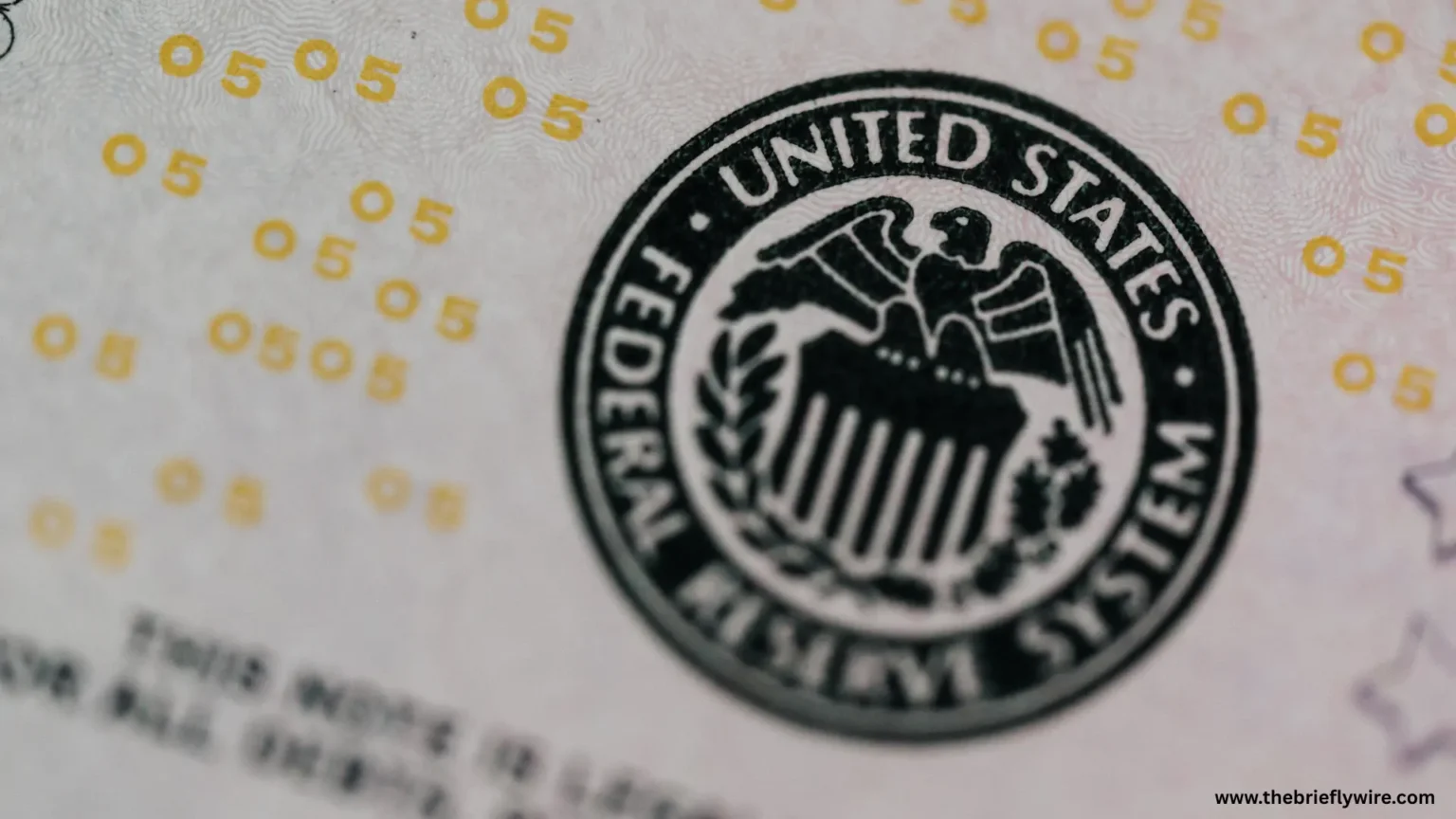

The Federal Reserve, often referred to simply as the “Fed,” is the central bank of the United States. It is responsible for maintaining stability in the nation’s money supply, interest rates, and banking system.
- What is the Federal Reserve?
- When and why was the Federal Reserve established?
- How does the Federal Reserve work?
- Key functions of the Federal Reserve
- What impact does the Federal Reserve have on India?
- FAQs
- What is the Federal Reserve?
- Is the Federal Reserve a government agency?
- Who determines the Federal Reserve interest rates?
- Conclusion
The bank performs vital functions, such as making key economic decisions to balance the national economy and fostering employment growth.
In this article, we will explore what the Federal Reserve is and learn more about it; let’s get started.
What is the Federal Reserve?
The Federal Reserve’s primary responsibilities include ensuring the smooth functioning of the country’s banking system, promoting employment, stabilizing the national economy, and keeping inflation under control.
The Federal Reserve sets interest rates and regulates the money supply within the economy.
Consequently, any decision made by the Federal Reserve impacts the economies of both the United States and the entire world.
When and why was the Federal Reserve established?
Until 1907, the United States frequently experienced economic crises and bank failures; consequently, on December 23, 1913, the 28th U.S. President, Woodrow Wilson, signed the Federal Reserve Act, thereby establishing the Federal Reserve.
The mandate of the Federal Reserve was to make the U.S. financial system more secure, stable, and reliable; to oversee the nation’s banking system; to provide financial assistance to banks during economic crises; and to supply money to the economy as needed.
How does the Federal Reserve work?
If inflation begins to rise in the economy, the Federal Reserve raises interest rates, making borrowing more expensive and causing people to spend less money.
Conversely, if the aim is to inject money into the economy, the Federal Reserve lowers interest rates; this makes borrowing cheaper, thereby boosting both investment and consumer spending.
The Federal Reserve assists banks during financial crises, manages the nation’s money supply, and oversees banking operations.
Operating through 12 regional Federal Reserve banks across the United States, it ensures the smooth functioning of the country’s financial system.
It makes key decisions through regular meetings; consequently, every decision taken by the Federal Reserve impacts not only the U.S. market but also global stock markets, the dollar’s exchange rate, and international investment.
What is a Board of Governors?
The Board of Governors serves as the highest administrative and policy-making body of the Federal Reserve, comprising a total of seven members.
These seven members are appointed by the President of the United States and confirmed by the U.S. Senate; they serve 14-year terms, a duration that allows them to make economic decisions with a degree of independence from political shifts.
The Board’s primary responsibilities include overseeing U.S. monetary policy and supervising the operations of the Federal Reserve’s 12 regional banks; it also plays a pivotal role in regulating interest rates and the banking system, as well as in making other significant decisions.
Consequently, the Board of Governors is considered one of the most influential institutions shaping the U.S. economy.
What are Federal Reserve Banks?
The Federal Reserve Banks are a crucial component of the Federal Reserve System; there are 12 such regional banks across the United States.
They serve the banking systems and local commercial banks within their respective regions, handle currency distribution, monitor economic activity, and help ensure the smooth functioning of the nation’s financial transactions.
These 12 regional Federal Reserve Banks gather data on local economies and relay it to the Federal Reserve, as economic conditions across different parts of the country are taken into account when determining interest rates, monetary policies, and other economic decisions.
Federal Reserve Banks act as a vital link between national economic policy and local economies.
Key functions of the Federal Reserve

The Federal Reserve is a crucial institution that maintains the stability of the entire U.S. economy.
Its primary functions include controlling inflation, promoting employment, supervising the banking system, and supporting the financial system during economic crises.
The Federal Reserve implements various economic policies in response to changes in the economy, which impact both U.S. and international markets.
Its operations are considered vital for maintaining public confidence in the banking system, fostering economic growth, and ensuring financial stability.
Controlling interest rates
Another key function of the Federal Reserve is managing interest rates; through these rates, it influences spending, investment, and lending within the economy.
The Federal Reserve raises interest rates when inflation rises, whereas it lowers them if economic growth slows down or employment declines.
There are specific economic reasons for these actions: when interest rates rise, borrowing becomes more expensive, and consumer spending decreases, thereby bringing inflation under control.
Conversely, when the economy slows or employment drops, the Federal Reserve lowers interest rates. This makes borrowing cheaper, encourages investors to invest more, facilitates business expansion, and boosts consumer spending.
This stimulates economic growth and creates job opportunities; changes in interest rates impact not only the United States but the rest of the world as well.
You now understand why the Federal Reserve manages interest rates.
What impact does the Federal Reserve have on India?
You might wonder how decisions made by the Federal Reserve—America’s central bank—affect India.
The Federal Reserve’s decisions are not limited to the US alone; their impact is felt across the globe, including in India. Let us look at how this happens.
When the Federal Reserve raises interest rates, the returns on investments in the US stock market increase. Consequently, foreign investors withdraw their capital from stock markets in countries like India and invest it in the US market instead.
This can put pressure on the Indian stock market, cause the rupee to depreciate against the dollar, and increase the likelihood of imports becoming more expensive.
The Federal Reserve’s decisions also influence the dollar-rupee exchange rate, the cost of crude oil imports, inflation, the policies of the Reserve Bank of India (RBI), and the flow of foreign investment.
That is why investors, businesses, and economists in India closely monitor every decision made by the Federal Reserve.
FAQs
What is the Federal Reserve?
The Federal Reserve, or the Fed, is the central bank of the United States. It performs key functions such as setting interest rates, controlling inflation, regulating the banking system, and stabilizing the U.S. economy.
Is the Federal Reserve a government agency?
The Federal Reserve is neither a purely government entity nor a purely private one; it is an independent central banking system. Its Board of Governors is appointed by the U.S. government, while the 12 regional Federal Reserve Banks operate independently. Consequently, its structure is considered a blend of public and private elements.
Who determines the Federal Reserve interest rates?
The Federal Open Market Committee (FOMC) of the Federal Reserve makes decisions regarding interest rates. This committee comprises members of the Board of Governors and presidents of certain regional Federal Reserve Banks. The FOMC decides whether to raise, lower, or maintain interest rates after considering the state of the economy, inflation, and employment.
Conclusion
The Federal Reserve performs the crucial task of managing inflation, interest rates, the money supply, and the banking system in the United States.
Its monetary policies impact not only the US but also the global economy—including India’s—as well as stock markets, the value of the dollar, and foreign investment.
Therefore, understanding what the Federal Reserve is, how it operates, and how its decisions influence the global economy (including India’s) is valuable for every investor, student, and individual interested in the economy.
In today’s world, understanding the role of the Federal Reserve is increasingly important for grasping global economic developments.