

It is a common perception that every country in the world relies on a powerful military to protect its borders and maintain internal security.
- What is a standing army?
- Is it necessary for every country to have an army?
- Why do some countries not maintain an army?
- Small land area and low population
- High defense expenditure
- International Defense Agreement
- Peaceful policy
- Geographical Security
- Major countries without a standing army
- Vatican City
- How do these countries ensure their own security?
- Advantages of not having a standing army
- Disadvantages of not having a standing army
- Common Misconceptions About the Military (Myth vs. Fact)
- Frequently Asked Questions (FAQs)
- Could more countries abolish their militaries in the future?
- Why does Iceland not have an army?
- Why did Costa Rica abolish its military?
- Are countries without a military safe?
- Which country does not have an army?
- What is a standing army?
- Conclusion
When we think of national security, images of tanks, fighter jets, submarines, and vast numbers of trained soldiers come to mind.
Most nations across the globe spend a significant portion of their annual budgets on their defense systems.
However, you might be surprised to learn that there are countries in the world that do not possess a standing army of their own.
The decision not to maintain a military was not made impulsively; rather, it is rooted in profound historical, political, economic, and geographical reasons.
Despite lacking a military, these countries function securely and are recognized internationally as symbols of peace.
In this article, we will explore the specific reasons behind the absence of a standing army, examine how the security systems of such countries operate, and discuss the advantages and disadvantages of this policy in detail.
What is a standing army?
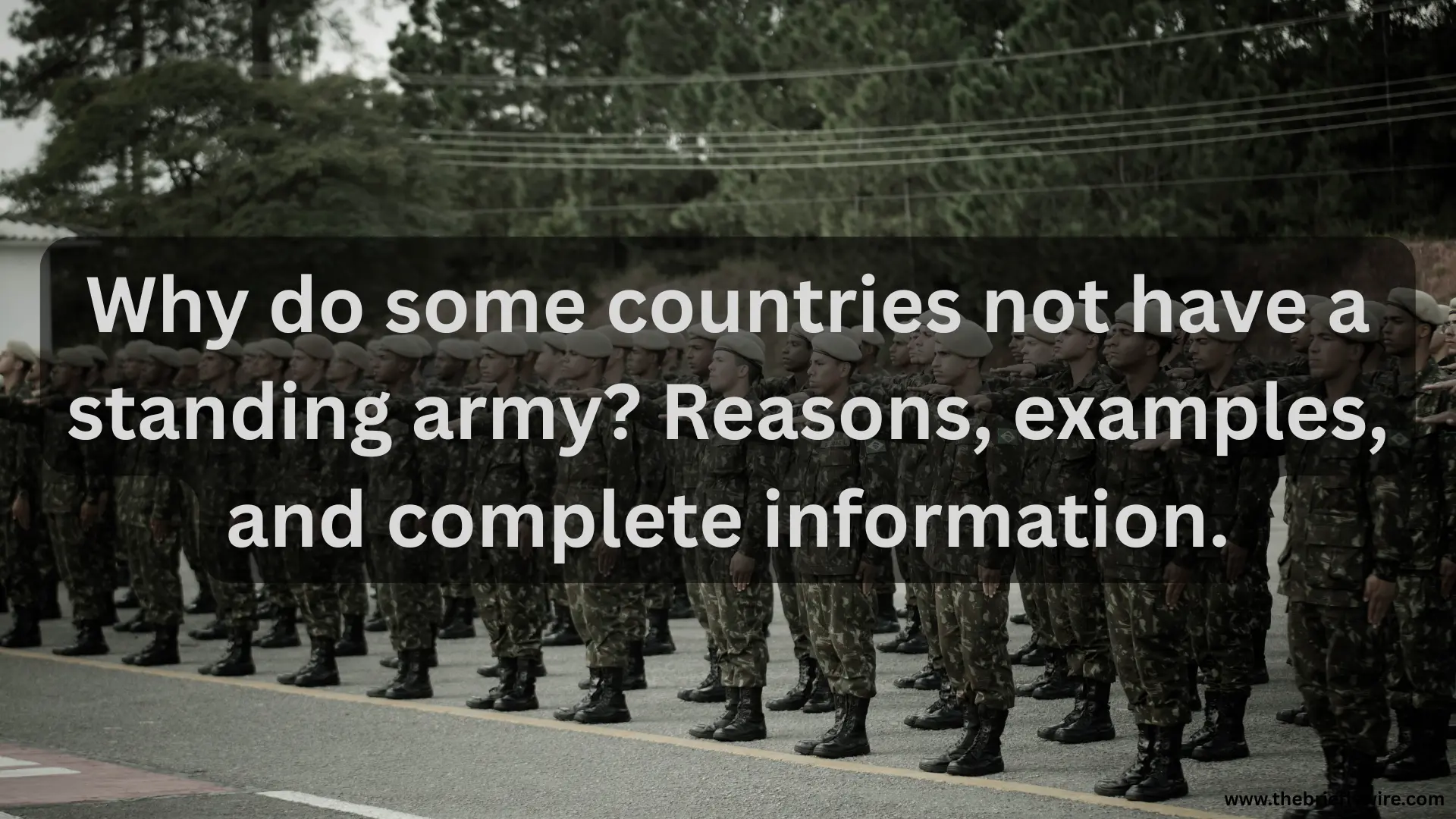
A permanent or “standing” army refers to a nation’s official military force that remains fully active, trained, and ready for combat at a moment’s notice, even during peacetime.
This force is maintained by the government; its soldiers receive regular monthly salaries, medical benefits, and various other allowances.
Even during peacetime, when there is no direct foreign aggression, these soldiers undergo rigorous daily training, guard the borders, and maintain proficiency with modern weaponry.
A standing army comprises various branches, such as the Army, Navy, and Air Force, all dedicated to the primary objective of safeguarding the nation’s sovereignty and territorial integrity.
Historically, many ancient kings did not maintain standing armies; instead, they would mobilize citizens or farmers to form a military force only when war arose.
However, in today’s modern world, almost all nations have adopted the system of a permanent military force that remains ready around the clock.
The greatest advantage of a standing army is its ability to respond immediately—without delay—should the country face a crisis or an invasion by foreign forces.
Conversely, nations that lack such a permanent system must rely on entirely different mechanisms or international agreements for their national security.
Is it necessary for every country to have an army?
It is generally believed that every country requires its own military to maintain a sovereign and independent existence.
A military force is considered an effective tool for defending against foreign aggression and securing a strong position on the global stage.
However, the needs and priorities of nations across the world vary.
Factors such as a country’s geographical location, relations with neighboring nations, and historical background determine whether it truly needs to incur the massive expense of maintaining a military.
Therefore, it would not be entirely correct to assume that every country must possess a military force.
For some small and geographically secure nations, maintaining a military proves to be a significant economic and political burden rather than a necessity for defense.
Countries with peaceful borders or those protected by major powers through international treaties, such as Japan, which is protected by the United States, feel no need to maintain their own independent military forces.
By saving the billions of rupees that would otherwise be spent on the military, these nations can instead invest in education, healthcare, infrastructure, and improving the standard of living for their citizens.
Thus, a military is not the only means of ensuring security; a country can be run safely and successfully through peaceful diplomacy, strong international relations, and a robust internal police system.
Why do some countries not maintain an army?
Some nations across the globe have taken the significant decision not to maintain a standing army, a move driven by a variety of complex factors.
Establishing a military force is not an overnight undertaking; it requires substantial, continuous funding, manpower, and state-of-the-art resources.
Every country faces unique political circumstances and challenges, leading some to conclude that rather than raising an army, it is more beneficial and practical to forgo one altogether.
Key reasons behind the decision not to maintain a military include economic savings, historical experiences, favorable geography, and a commitment to international peace.
Some nations have enshrined the abolition of their military directly into their constitutions after grappling with civil wars or military coups in the past.
Others have found that, due to their small size and the presence of friendly neighboring allies, there is simply no need for a military force.
As a result of these combined factors, these nations have prioritized the development of civilian sectors over maintaining a military.
Small land area and low population
Many small countries and island nations have very limited territory and populations ranging from just a few thousand to a few hundred thousand.
Raising a professional, full-time army from such a small population is extremely difficult, as a military requires a large pool of young manpower.
If a country’s total population is very low, establishing an army can lead to a severe shortage of personnel in other economic and administrative sectors.
Furthermore, from a geographical perspective, countries with a very small land area lack the “strategic depth” necessary to execute military strategies during a potential war.
If a large, powerful nation were to launch a surprise attack on such a small country, even a modest military force would be unable to hold out for long.
Consequently, rather than wasting money and manpower on a merely nominal military, these countries often decide against maintaining an army, choosing instead to channel all their energy and resources into internal national development.
High defense expenditure
In modern times, raising an army and maintaining its operational readiness is considered an extremely costly affair.
The expenditure is not limited merely to soldiers’ monthly salaries and allowances; billions of rupees are required annually for the procurement and regular maintenance of weaponry such as state-of-the-art fighter jets, tanks, and ammunition, as well as for communication systems and the continuous, rigorous training of troops.
Bearing such a massive financial burden is extremely difficult for the economies of small or developing nations, creating a risk that other essential needs may be neglected.
Countries with limited national income do not consider it affordable to spend vast sums on the military.
If the colossal amount spent on the military were instead invested in infrastructure and public amenities such as education systems, healthcare facilities, roads, electricity, water supply, and job creation, the citizens’ standard of living could improve significantly.
Consequently, many nations have decided against maintaining a standing army, guided by this economic prudence. For these countries, completely avoiding military expenditure and redirecting those funds toward public welfare schemes proves to be a highly beneficial and practical approach.
International Defense Agreement
Even though some countries do not possess a standing army of their own, they are not left completely vulnerable regarding their security.
These nations have entered into special bilateral defense agreements with major, powerful global powers as well as international organizations.
Under these agreements, if a country without a military faces a foreign invasion or a major security crisis, the allied nation bound by the pact immediately rushes to its aid and defends it using its own military forces.
Such international defense agreements eliminate the need for these small nations to establish independent militaries or incur the massive costs associated with maintaining them.
For instance, Iceland is a founding member of the global military alliance NATO and holds a direct defense agreement with the United States, effectively placing the entire responsibility for its security on its allies.
Similarly, the security of nations such as Micronesia, the Marshall Islands, and Palau is overseen by the United States under the ‘Compact of Free Association.’
Thanks to such robust international agreements, these countries are guaranteed complete security on the global stage without the need to maintain their own armed forces.
Peaceful policy
Some countries around the world have adopted a clear and firm pacifist stance by choosing not to maintain a military force.
These nations hold a deep conviction that sustainable peace can never be established through military might or violence.
Mindful of the devastating consequences of military power and the harrowing experiences of civil wars in the past, these nations made the significant decision to renounce arms.
By abolishing provisions for a military in their very constitutions, they have set a unique example of violence-free and peaceful coexistence for the entire world.
Adopting a pacifist policy has earned these nations a highly credible, impartial, and respected image on the international stage.
The absence of a military ensures that neither neighboring countries nor any other nations perceive a military threat from them, thereby avoiding unnecessary tension and arms races.
To resolve global disputes, these countries rely on diplomacy, dialogue, and international law rather than war.
Through their active participation in promoting international peace, human rights, and humanitarian efforts, these nations demonstrate that it is possible to live safely and with dignity in the world without a military.
Geographical Security
A country’s geographical layout and its location on the map play a crucial role in its security.
Some nations are endowed by nature with such secure geographical barriers that a direct invasion by foreign forces, whether by land or sea, is virtually impossible.
Island nations surrounded by vast oceans on all sides, or small countries nestled within inaccessible mountain ranges, naturally remain beyond the reach of adversaries.
Thanks to such natural protection, these countries do not feel the need for a military force.
Nations whose borders are surrounded by peace-loving allies face no threat of aggression or war from their neighbors.
When a country is not surrounded by any aggressive or hostile nations, maintaining a standing army becomes pointless. The secure environment created by natural barriers and friendly neighbors allows these countries to avoid unnecessary military expenditure and fully leverage the advantages of their geographical security.
Major countries without a standing army
There are more than twenty countries and autonomous territories in the world that do not possess their own official or standing armies.
These nations are spread across various continents and have chosen not to maintain a military based on their respective histories, economies, and geographical needs.
This group includes countries in Europe and Latin America, as well as several island nations in the Pacific Ocean. Instead of a military, these nations have established capable police forces and coast guards to maintain internal law and order.
These countries demonstrate that a nation can function successfully even without military might.
Countries such as Costa Rica, Iceland, Andorra, Liechtenstein, and Vatican City are prominent examples on this list.
The security arrangements and histories of each of these nations are fascinating.
In the following sections, we will explore details about these key countries and their unique security systems.
Costa Rica
Costa Rica, located in Central America, is considered the most famous nation in the world for existing without an army.
In 1948, following a brutal civil war, the country took the historic decision to completely disband its military.
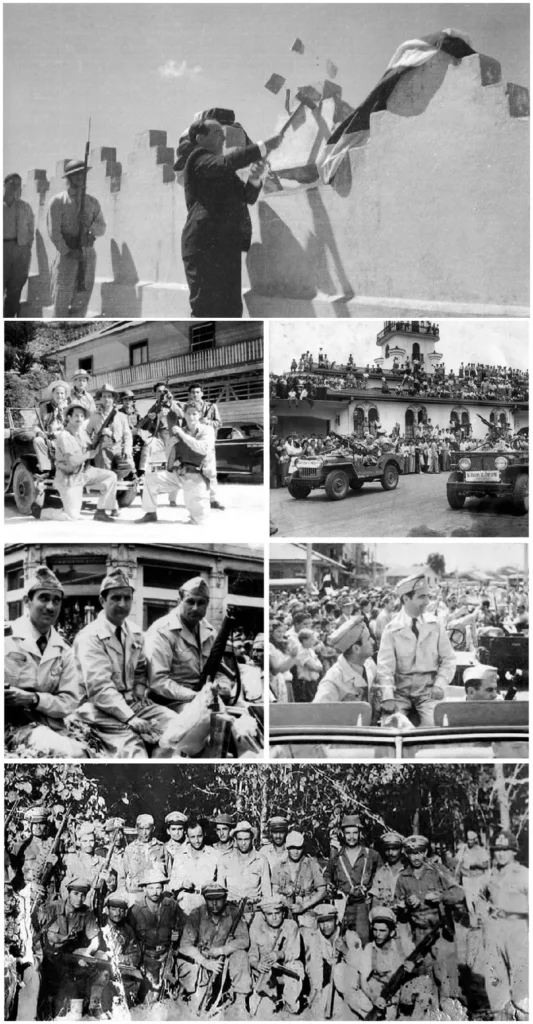
The then-President José Figueres Ferrer redirected military headquarters and funds toward education and culture.
In its 1949 Constitution, Costa Rica officially enshrined a ban on maintaining a standing army, making this decision an integral part of its national policy.
Costa Rica utilized the billions of dollars saved from abolishing the military for education, healthcare facilities, environmental protection, and the development of tourism.
Today, the country is recognized as one of the most stable, prosperous, and happy nations in Central America.
Regarding security, Costa Rica relies on its specialized civil police force and the Inter-American Treaty of Reciprocal Assistance, under which the United States and other Latin American nations are obligated to come to its aid in the event of foreign aggression.
Iceland
Iceland, located in the North Atlantic Ocean, is the only country in the world that—despite being a founding member of the powerful military alliance NATO—does not maintain a standing army.
The country has not had an official military force since 1869.
Due to its very small population and remote island geography, Iceland chose to focus on international cooperation rather than establishing an independent military.
Iceland is considered to have one of the lowest crime rates in the world, eliminating the need for a military to handle internal security.
For security purposes, Iceland maintains a highly modern and well-trained Coast Guard, which oversees maritime surveillance and rescue operations.
Additionally, a specialized police force is responsible for maintaining internal law and order.
A bilateral defense agreement signed with the United States in 1951 is crucial for Iceland’s international security; under this pact, US forces would come to Iceland’s defense in the event of a foreign invasion.
Furthermore, other NATO member nations periodically monitor and help secure Iceland’s airspace.
Andorra
Nestled in the Pyrenees mountains along the borders of France and Spain, Andorra is a tiny, picturesque country.
The country does not possess its own official or standing army.
Due to its limited territory and the presence of two very friendly neighbors, Andorra has never felt the need to establish an independent military force.
A small national police force maintains law and order within the country, effectively handling internal security responsibilities.
Full responsibility for Andorra’s security has been entrusted to its neighboring nations through international agreements.
In 1993, Andorra entered into a trilateral defense agreement with both France and Spain.
Under this agreement, France and Spain are legally obligated to rush to Andorra’s defense in the event of any foreign threat or invasion.
Thanks to this robust diplomatic and military security umbrella, Andorra enjoys complete security without incurring any additional expenditure on troops or weaponry.
Lichtenstein
Nestled between Switzerland and Austria in Europe, Liechtenstein is one of the smallest and most economically prosperous countries in the world.
Liechtenstein has not maintained a standing army since 1868.
Recognizing that the immense cost of maintaining an army—following the Austro-Prussian War of 1866—was placing a heavy strain on the national economy, Liechtenstein’s rulers took the bold decision to completely abolish the military.
Since then, instead of spending money on an army, Liechtenstein has channeled those funds into the development of trade, industry, and public amenities.
The country’s National Police force is responsible for maintaining internal security as well as law and order.
Regarding external security, Liechtenstein shares extremely close and historic ties with its neighbor, Switzerland.
Although there is no formal treaty for direct military protection between the two nations, Switzerland handles Liechtenstein’s border security, customs, and diplomatic representation.
Thanks to the friendly relations between the two countries and a policy of neutrality, Liechtenstein faces no threat of foreign aggression.
Vatican City
Vatican City, the smallest country in the world in terms of both area and population, is an independent and autonomous state situated within the Italian city of Rome.
As the supreme center of the Catholic Christian faith, the country maintains no traditional or permanent national army of its own.
In 1970, Pope Paul VI completely abolished the traditional military system within Vatican City by disbanding historical military units such as the Noble Guard and the Palatine Guard.
Due to its minuscule size and religious significance, the country faces no direct threat of external aggression, nor is there a need to incur massive financial expenditure on a military force.
The security arrangements for Vatican City are unique and steeped in history.
The responsibility for the personal security of the Pope and the Apostolic Palace lies with the renowned ‘Pontifical Swiss Guard,’ a force considered one of the oldest and most disciplined security units in the world.
Additionally, the ‘Gendarmerie,’ a specialized police force, handles internal law and order as well as civil security within the country.
Regarding external security and international protection, Vatican City relies entirely on Italy; the Italian armed forces provide all forms of military protection to this tiny state.
How do these countries ensure their own security?
Even without a standing army, these countries are far from complacent regarding their security. To defend against external aggression and maintain internal peace, they have established highly organized and alternative security systems.
By avoiding the immense costs associated with a conventional military, these nations safeguard themselves through modern technology, highly skilled police forces, and diplomatic agreements.
Their entire security framework rests primarily on four key pillars.
These include police forces that maintain internal law and order, coast guards that protect maritime borders, robust international military defense agreements, and special security forces deployed for emergencies.
Thanks to the coordinated functioning of these four systems, these countries rank among the safest nations in the world, despite not having a standing army.
Police Force
In countries that do not maintain a standing army, the primary responsibility for upholding domestic law and order rests with the national police force.
These police forces do not merely control ordinary crime; they also receive specialized military and paramilitary training.
The police apparatus efficiently handles a wide range of duties, from routine patrolling to maintaining law and order and ensuring the safety of citizens within urban areas.
In some nations, these police forces serve as the first line of defense during emergencies or when national security is threatened.
For instance, police forces in countries like Costa Rica and Iceland are equipped with state-of-the-art weaponry, riot control gear, and specialized commando units.
These forces are fully capable of tackling serious challenges such as internal insurgencies, terrorist activities, or civil unrest.
Coast Guard
In countries that possess an extensive coastline but lack a dedicated navy, the primary responsibility for security rests with the Coast Guard.
This force is tasked with protecting maritime boundaries, preventing illegal infiltration, curbing smuggling, and monitoring illegal fishing activities at sea.
To maintain maritime security, these forces are equipped with modern boats, patrol vessels, and specialized helicopters.
In addition to maritime security, the Coast Guard also shoulders the crucial responsibility of conducting search and rescue operations during natural disasters or maritime accidents.
For instance, although Iceland does not have a navy of its own, its Coast Guard is considered highly skilled and state-of-the-art.
This force promptly responds to all manner of maritime challenges and emergencies, thereby eliminating the need for these countries to deploy a separate navy.
Protection Agreement
For most countries that do not maintain a military, international defense agreements form the primary basis of their external security. These nations have entered into formal bilateral or multilateral pacts with global superpowers or powerful neighboring states.
Under these agreements, if a foreign adversary attacks one of these non-military nations, the allied country bound by the pact is legally obligated to deploy its own military forces to defend it.
Such agreements eliminate the need for these small nations to maintain their own arsenals or large military contingents.
For instance, Iceland’s security relies on agreements with NATO and the United States, while the responsibility for Andorra’s security lies with France and Spain.
Micronesia, the Marshall Islands, and Palau enjoy full security under the ‘Compact of Free Association’ with the United States.
These international diplomatic agreements provide these nations with a comprehensive military security shield, despite their lack of a standing army.
Special Security Forces
In some countries, specialized security forces are deployed to protect Very Important Persons (VIPs) and to provide assistance during critical crises.
These forces are more advanced than regular police; they undergo high-level military training and are equipped with modern weaponry. They are utilized to counter terrorist attacks, hostage situations, or any other serious security challenges.
The most famous example of this is the ‘Pontifical Swiss Guard’ in Vatican City, a force dedicated solely to the protection of the Pope and the Apostolic Palace.
Similarly, in other nations that do not maintain a standing army, small yet highly agile special commando units operate to take immediate action during emergencies and protect vital government assets, thereby maintaining the country’s internal stability.
Advantages of not having a standing army
The most significant and direct benefit of not having a standing army is the immense financial savings for the country. Maintaining an army—covering soldiers’ salaries, allowances, and pensions, as well as the procurement and upkeep of state-of-the-art weaponry, fighter jets, and tanks—incurs an annual expenditure of billions of rupees.
When a country saves this entire expenditure, the funds can be redirected toward education, healthcare systems, infrastructure (such as roads), research, and social welfare schemes.
This leads to a rapid improvement in the citizens’ standard of living and significantly boosts the country’s Human Development Index (HDI).
Another crucial benefit is political stability and internal peace. Many developing nations across the world face major issues such as military coups or the establishment of military dictatorships.
The absence of an army eliminates the risk of a military mutiny at its very root. Furthermore, the lack of a military fosters an image of a peace-loving and neutral nation on the international stage.
Neighboring countries perceive no military threat from such a nation, thereby averting unnecessary arms races and allowing diplomatic relations to become stronger and more trust-based.
Disadvantages of not having a standing army
While there are economic and social benefits to not maintaining a standing army, this policy also gives rise to serious disadvantages and challenges.
The most significant drawback is the complete lack of direct defensive capability in the event of a foreign invasion. If an aggressor nation or enemy force launches a surprise attack, the absence of a national military makes it impossible for these countries to fight back using their own strength.
They are forced to rely entirely on the assistance of allied nations or international agreements, which can lead to significant delays in mounting an immediate response during a crisis.
Another major disadvantage involves limitations on national sovereignty and foreign policy. When a country depends on another superpower or ally for its security, it often has to operate under the political and diplomatic pressure of that protecting nation.
This makes it difficult to adopt a completely independent stance on international issues. Furthermore, during times of severe internal riots, major terrorist attacks, or natural disasters, the police force faces immense strain, as the assistance of a disciplined military with vast manpower is unavailable in such critical situations.
Common Misconceptions About the Military (Myth vs. Fact)
There are many common misconceptions about countries that do not maintain a standing army. The biggest misconception is that these nations lack any security apparatus whatsoever and are completely vulnerable.
In reality, these countries are extremely vigilant regarding security. Although they do not have a military, they possess capable police forces, coast guards, and special commando units equipped with state-of-the-art weaponry.
These forces are fully capable of maintaining internal law and order and handling emergency situations.
Another prevalent misconception is that these countries could be easily overrun in the event of a foreign invasion. However, the fact is that these nations have entered into robust defense agreements with powerful global superpowers and military alliances.
Should anyone attack these countries, the armed forces of their allies would immediately step in to defend them on the battlefield.
Consequently, these countries are not as vulnerable as they might appear from the outside; on the contrary, they enjoy a formidable security shield through diplomatic and legal frameworks.
Frequently Asked Questions (FAQs)
Could more countries abolish their militaries in the future?
It is difficult for countries with vast geographical areas and aggressive neighbors to abolish their militaries. However, if international cooperation increases and peace agreements are implemented, some small and developing nations could adopt this policy by reducing military expenditure.
Why does Iceland not have an army?
Due to its very small population, insular geography, and history of being extremely peace-loving, Iceland does not maintain its own military. It is a member of NATO, and its external security is guaranteed through an agreement with the United States.
Why did Costa Rica abolish its military?
Following the brutal civil war of 1948, Costa Rica constitutionally abolished its military in 1949 to prevent military-led political coups and to redirect the immense military expenditure toward education, healthcare, and social development.
Are countries without a military safe?
Yes, these countries are extremely safe. They rely on capable police and coast guard forces for internal security, while for external security, they have entered into international defense agreements with powerful nations.
Which country does not have an army?
There are more than twenty countries in the world—such as Costa Rica, Iceland, Andorra, Liechtenstein, Vatican City, Micronesia, the Marshall Islands, and Palau—that do not have their own standing armies.
What is a standing army?
A standing army is a state-run military force that receives regular pay and remains ready around the clock, even during peacetime. This force is constantly trained to counter any foreign aggression at a moment’s notice.
Conclusion
The absence of a standing army is not merely a matter of necessity for certain countries; it is a highly visionary, economically pragmatic, and pacifist decision.
While most nations across the globe spend a significant portion of their GDP on armaments and the military, these countries have channeled those funds into education, healthcare, infrastructure, and environmental protection, thereby elevating the standard of living for their citizens.
Nations such as Costa Rica, Iceland, and Andorra have demonstrated that, through strategic defense agreements and robust international relations, a country can remain entirely secure and stable even without a military force.
Although this model may not be feasible for all large nations or those facing border tensions, these countries present a unique ideal of peaceful coexistence to the entire world.
This system conveys a vital message: a nation can achieve progress by prioritizing diplomacy and human development over military might.